QuoData develops methods, proficiency testing programmes, and data pipelines that make quality measurable — supporting laboratories, regulatory bodies, and research institutions. Novel algorithms and AI - based on 30 years of experience.
A Powerful Network
QuoData teams up with specialists
Three companies, one shared commitment to quality and excellence in life-science data.
Effect-based bioanalysis
Sensitive, standardized effect-based bioassays for the detection of endocrine disruptors and hormonal activity in food, environmental, and health samples. Distributed worldwide.
ISO 17043-accredited Proficiency testing
Accredited proficiency testing programs that benchmark lab performance across material testing, bioassay, liquid biopsy, and environmental testing applications. Versatile and expandable.
Liquid biopsy & biomarkers
Biomarker validation, cfDNA reference materials, and quality assurance for liquid biopsy — bridging analytical excellence and clinical precision medicine.
A focused set of projects that represent the depth and range of QuoData's expertise.
01
PROLab for interlaboratory comparisons
The worldwide reference tool for planning and conducting interlab studies and proficiency tests. Trusted by more than 70 providers worldwide.
02
Acceptance sampling - Shaping global standards
We developed a cutting-edge Bayesian statistical framework now being integrated into official UN Codex Alimentarius guidelines, setting a new global benchmark for data-driven quality assurance in food and feed.
03
AI for Cancer Evidence Mapping
QuoData built a bespoke AI/ML classification support system for WHO's cancer research agency that automates the large-scale screening and coding of scientific literaturel. The tool uniquely combines LLMs with statistically rigorous uncertainty quantification.
Our team
The people behind QuoData
Meet the experts of the multi-disciplinary QuoData team.
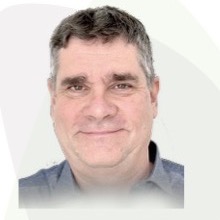
PD Dr. habil. Steffen Uhlig
CEO & Scientific Head
Statistical architect behind QuoData's quality assurance methodology — with expertise spanning proficiency testing, method validation, and AI-driven life sciences analytics.
Steffen Uhlig is CEO and Scientific Head of QuoData GmbH. With a Habilitation in Statistics from Freie Universität Berlin and more than 30 years of experience in mathematics and statistics, he has shaped the field of analytical quality assurance across food safety, diagnostics, environmental analysis, and materials research. He leads QuoData's interdisciplinary data science team and has been central to designing and evaluating proficiency testing programs and validation studies for more than two decades. At BioIT, Steffen brings the statistical rigor that makes life sciences data trustworthy — from method validation to AI benchmarking and liquid biopsy quality frameworks.
Biotechnology and QA expert driving QuoData's bioanalytical research — from biosensor development to validated molecular diagnostics and interlaboratory studies.
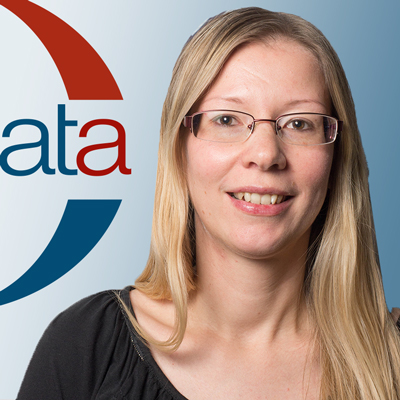
Karina Hettwer is Director of Research & Biotechnology at QuoData GmbH, where she has led the biotechnology department since 2012. Trained as a biotechnologist at Martin-Luther-Universität Halle-Wittenberg, her expertise spans biosensor development, bioinformatics, analytical method validation, and quality assurance for molecular diagnostics. She has co-authored research on interlaboratory studies for SARS-CoV-2 detection, effect-based bioassays, and yeast biosensor platforms. At BioIT, Karina represents the practical side of translating bioanalytical innovation into validated, quality-assured workflows — from assay development to proficiency testing and regulatory compliance.
Data scientist and AI specialist driving QuoData's technology strategy — from non-targeted screening to machine learning in analytical quality assurance.
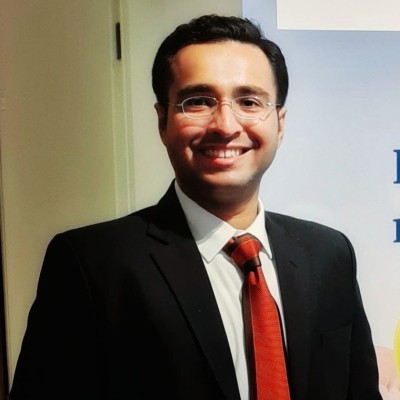
Kapil Nichani is Director of Technology & Innovation at QuoData GmbH, working at the intersection of data science, analytical chemistry, and AI-driven quality assurance. Trained in chemical engineering and applied statistics in the United States, he leads QuoData's technological development and contributes to research on non-targeted screening methods, AI-based food authenticity testing, and statistical frameworks for analytical method validation. With 29 peer-reviewed publications and nearly 200 citations, his work bridges computational intelligence and the rigorous quality standards that life sciences data demands.
Lab operations and proficiency testing expert — coordinating interlaboratory bioassay studies and guiding labs through ISO 17043:2023 compliance.
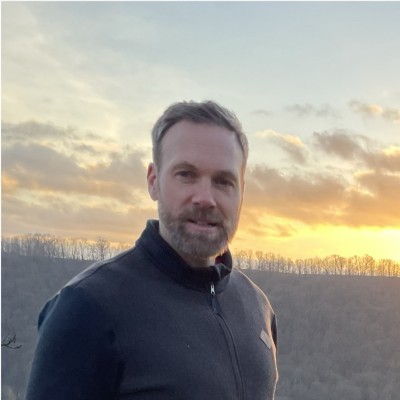
Martin Jähne heads QuoData's laboratory operations, overseeing the practical infrastructure that makes large-scale interlaboratory comparisons possible. His scientific work spans effect-based bioassay coordination and the validation of biosensor-based methods for environmental and health monitoring. He was a lead contributor to the interlaboratory validation of the Arxula yeast estrogen screen (ISO/CD 19040-2) and guided the professional community through the updated ISO 17043:2023 standard for proficiency testing sample production and distribution. At BioIT, Martin connects bench-level analytical expertise with the quality systems that support precision diagnostics pipelines.
Bioinformatics researcher at TUM focused on cell-free DNA biology and the statistical underpinnings of liquid biopsy diagnostics.
Carsten Uhlig is a PhD candidate at Technical University Munich, specializing in cell-free DNA biology and bioinformatics. His research explores the tissue-specific epigenetic origins of circulating DNA — a foundation for next-generation liquid biopsy diagnostics. Closely collaborating with QuoData, he bridges cutting-edge molecular biology and rigorous statistical analysis. At BioIT, his work represents the scientific interface between cfDNA research and the data quality infrastructure needed to translate liquid biopsy into clinical reality.
Cell-free DNA scientist and clinical biomarker pioneer, bridging the biology of liquid biopsy with rigorous quality standards for molecular diagnostics labs.
Abel J. Bronkhorst is Head of Cell Biology Research Laboratory at TUM Klinikum Deutsches Herzzentrum Munich, where his research focuses on the biology, origins, and clinical utility of cell-free DNA (cfDNA). With over 3,100 citations and an h-index of 24, his work has shaped how the field understands cfDNA fragmentation patterns, preanalytical variables, and the application of liquid biopsy to cancer detection and monitoring. His landmark reviews — including "The emerging role of cell-free DNA as a molecular marker for cancer management" — are among the most cited contributions in the field. At BioIT, he brings the scientific perspective of a front-line cfDNA researcher to QuoData's quality assurance programs for liquid biopsy laboratories, ensuring that external quality assessment in this rapidly evolving field is grounded in current biological reality.
Mathematician and interlaboratory study specialist, validating the statistical foundations of molecular methods from PCR to metabarcoding in food safety and diagnostics.
Kirstin Frost holds a Diplom in Mathematics from TU Dresden (2006) and has been a core member of QuoData's scientific team ever since. As head of the interlaboratory studies group, she leads the planning and statistical evaluation of ring trials for clients in analytical chemistry, food safety, and molecular diagnostics. Her expertise covers probability-of-detection modelling for qualitative PCR methods, DNA metabarcoding validation, and interlaboratory method comparison under ISO 17043. She has co-authored peer-reviewed publications on food authenticity testing, SARS-CoV-2 method comparisons, and method validation frameworks — consistently applying mathematical rigour to ensure that laboratory methods are not just designed, but truly proven fit for purpose. At BioIT, Kirstin represents the statistical backbone that makes interlaboratory comparisons for molecular diagnostics defensible and internationally recognized.
Software engineer and digital infrastructure architect, building the platforms that make global proficiency testing accessible, auditable, and scalable.
Thomas Dylla holds a degree in Aerospace Engineering from TU Dresden (2014) and has been QuoData's Senior Developer since 2017. He is the primary architect of PROLab HUB — the online platform that connects proficiency testing providers with participating laboratories worldwide, used by clients including US NIST, Merck KGaA, AOCS, and DLA Proficiency Tests GmbH. His work spans custom data entry workflows, automated notifications, result management systems, and interactive performance dashboards (MyStat) that allow labs to track their performance across testing rounds. Thomas also serves as QuoData's certified Data Protection Officer. At BioIT, he represents the engineering layer without which statistical quality assurance would remain theory: the reliable, scalable infrastructure that turns methodology into measurable impact for laboratories worldwide.
Bertrand Colson, Dipl.-Math.
Maths Team · Project Manager
Applied mathematician and PT project manager translating interlaboratory statistics into actionable, internationally recognized quality benchmarks.
Bertrand Colson is a project manager and mathematician at QuoData GmbH, specializing in the planning and statistical evaluation of interlaboratory studies and proficiency testing programs. His technical expertise covers measurement uncertainty quantification, sample homogeneity and stability analysis, and the validation of digital PCR methods. A contributor to Codex Alimentarius standards discussions (CCMAS), he has been instrumental in bringing mathematical rigor to international quality benchmarking frameworks. At BioIT, Bertrand embodies the mathematical backbone of reliable life sciences data — ensuring that the numbers from molecular diagnostics labs are not just collected, but truly comparable.